Royal Canin Adult Shih Tzu Dry Food: Feeding Amounts by Weight
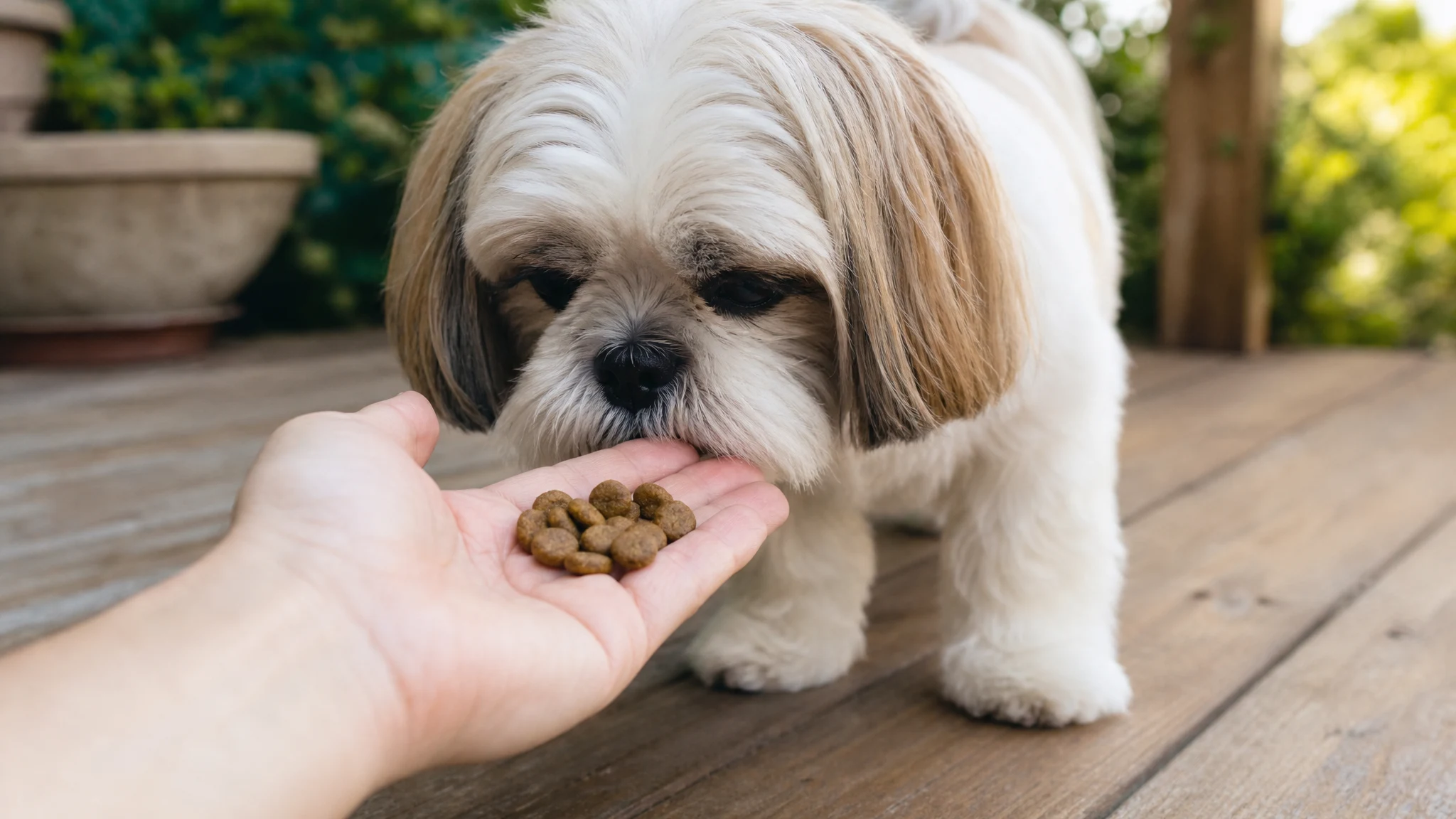
General nutrition information compiled from product labels and published sources, not veterinary advice. Your veterinarian is the right person to choose a diet for your dog, especially one with a health condition.
Working out how much to scoop is the part of feeding that most owners rush. With a small dog, a few extra kibbles a day add up.
This guide shows how to use the feeding table for Royal Canin's Breed Health Nutrition Shih Tzu Adult dry food. It covers weighing your dog, reading the table, measuring accurately and adjusting over time. The Royal Canin US product page is the source for every product detail here.
What this food is, according to its label
Royal Canin lists royal canin adult shih tzu dog dry food as a formula for purebred Shih Tzus 10 months and older. The page says it is formulated to meet the AAFCO Dog Food Nutrient Profiles for maintenance. That means it is meant for adult upkeep, not for growing puppies.
Here is the label data the brand publishes:
- First five ingredients: brewers rice, brown rice, chicken by-product meal, chicken fat, oat groats.
- Crude protein: 22.0% minimum.
- Crude fat: 18.0% minimum.
- Crude fiber: 4.7% maximum.
- Energy: 355 kcal ME per cup, as fed, calculated.
- Kibble size: Royal Canin says the shape, size and texture are designed for the Shih Tzu, but it gives no measurement. Check with the brand if size matters to you.
It is not grain free. We compared label data only. We did not run feeding trials or taste tests, so nothing here says how a particular dog will do on it.
Materials you will need
- A bag of the food, so you can read the feeding table on the package or on the Royal Canin product page.
- A scale that can weigh your dog. A baby scale or a bathroom scale works, using the difference between your weight with and without the dog.
- A kitchen scale that measures in grams, or a standard dry measuring cup.
- A notebook or phone note for weights and portions.
- Your veterinarian's contact details, in case your dog has a health condition.
Step-by-step: finding your dog's daily amount
Step 1: Confirm this is the right life stage
The adult formula is described for purebred Shih Tzus 10 months and older. Royal Canin makes a separate Shih Tzu puppy formula for dogs from 8 weeks to 10 months. If your dog is younger, use the puppy product's own table instead. Our Shih Tzu feeding chart by age and weight explains how needs change across life stages.
If your Shih Tzu is a mix, or is near the 10 month mark, ask your vet when to switch. The label's "purebred" wording is a reason to confirm.
Step 2: Weigh your dog
The table is built around body weight, so guessing will throw off every later step. Weigh your dog and write the number down. WebMD, a secondary source, gives an adult Shih Tzu weight of 9 to 16 pounds. Your dog may sit inside or outside that range, so use the actual number.
Weigh at the same time of day, ideally before a meal.
Step 3: Pick the activity level
The Royal Canin table lists daily amounts by weight and activity level. Choose the row that matches how your dog really lives.
- A dog who naps most of the day and takes short, easy walks is probably low activity.
- A dog who plays hard or walks far most days may fit a higher level.
Many Shih Tzus are indoor companions. If you are torn between two levels, start with the lower one and watch the results (see Step 6).
Step 4: Read the amount from the table
Find your dog's weight down the side and the activity level across the top. The cell where they meet is the daily amount. Royal Canin's own example is an 8.8 lb (4 kg) low-activity dog, which gets 3/4 cup (66 g) per day.
For other weights, read the current table on the bag or the product page. We do not copy other rows here, because the brand can update them and a stale number is worse than none.
Step 5: Measure the food accurately
Grams are more reliable than cups. Scooped kibble can vary a lot depending on how tightly it packs. If you use a cup, level it off and use the same cup every time.
Put a bowl on the kitchen scale, zero it, and pour in the daily grams. Then split the amount into meals. The product page example gives a daily total, not a meal count. Ask your vet whether to split it into two meals or more for your dog.
For reference, the label lists 355 kcal per cup. Royal Canin's 3/4 cup example works out to roughly 266 kcal a day by simple multiplication. That figure is our arithmetic from the label, not a number the brand states.
Step 6: Check body condition and adjust
Treat the table as a starting point. Dogs of the same weight can need different amounts. Every few weeks, check your dog:
- You should be able to feel the ribs under a light covering of flesh.
- Looking from above, there should be a gentle waist behind the ribs.
- A Shih Tzu's long coat can hide weight gain, so use your hands, not just your eyes.
If your dog is gaining, move toward a lower amount. If your dog is thin, move toward a higher one. Make small changes, then recheck. Your vet can show you a body condition scoring chart.
Switching foods without upsetting the stomach
If your dog is eating something else now, change over gradually across several days. Mix a little of the new food into the old and shift the balance each day. A sudden swap can cause loose stools in some dogs. Royal Canin's page does not give a transition schedule, so ask the brand or your vet if you want a specific plan.
Tips for better portion control
- Count treats. Small dogs have small calorie budgets. If you give treats or training rewards, take a little out of mealtime.
- Feed from a measured container. Pre-portion a few days of meals so everyone in the house feeds the same amount.
- Reweigh regularly. Update your numbers when your dog's weight changes, since the table row may change too.
- Keep a log. Weight, portion and stool quality in one place helps your vet spot trends.
- Watch the first bag. Note appetite, stool and skin or ear changes in the first weeks.
Common mistakes to avoid
- Using the puppy table for an adult, or the reverse. The two Shih Tzu formulas have different numbers and different life stages.
- Estimating weight. A guess of "about 12 pounds" can place your dog in the wrong row.
- Topping up the bowl all day. Free feeding makes the daily total hard to track.
- Assuming a bigger scoop means a healthier dog. WebMD lists obesity among the health concerns for the breed, so extra food is not a safe default.
- Ignoring the rest of the label. The guide covers this one product only. Other foods have different calorie counts.
- Changing the portion and the food on the same day. If something goes wrong, you will not know which change caused it.
What results to expect
Done carefully, measuring by weight may help you keep your dog's weight steady and make adjustments easier to track. Many owners notice that a measured routine takes the guesswork out of feeding. A healthy weight can also make daily life more comfortable for a small dog, though results vary from dog to dog.
This food cannot prevent, treat or cure any disease. WebMD notes that Shih Tzus can be prone to skin and ear allergies, and it does not state a cause. If your dog itches, has ear trouble or has digestive upset, talk with your veterinarian before changing the diet. Short-nosed airway problems are also common in the breed. If your dog has breathing trouble, ask your vet how weight and meal size might matter.
When to check with your vet first
Confirm amounts with your veterinarian if your dog has any health condition, takes medication, is overweight or underweight, is a senior, or is pregnant or nursing. The label table is a general guide, and only a vet can decide what suits an individual dog. Prescription diets are something a veterinarian prescribes, and this food is not one.
The FDA has an ongoing page on diet and canine dilated cardiomyopathy (DCM). Its latest update is dated December 23, 2022, and it cautions that report counts alone do not show that a product caused illness. If you have questions about your dog's heart or diet, your vet is the right person to ask.
Quick recap
- Check that your dog is 10 months or older.
- Weigh your dog.
- Choose the activity level that is honestly accurate.
- Read the daily amount from the table.
- Measure by grams, and split into meals as your vet advises.
- Check body condition and adjust in small steps.
For the full product details and the current feeding table, see the Royal Canin Shih Tzu Adult product page.