Homemade vs Commercial Dog Food for Shih Tzu: Weighing the Tradeoffs
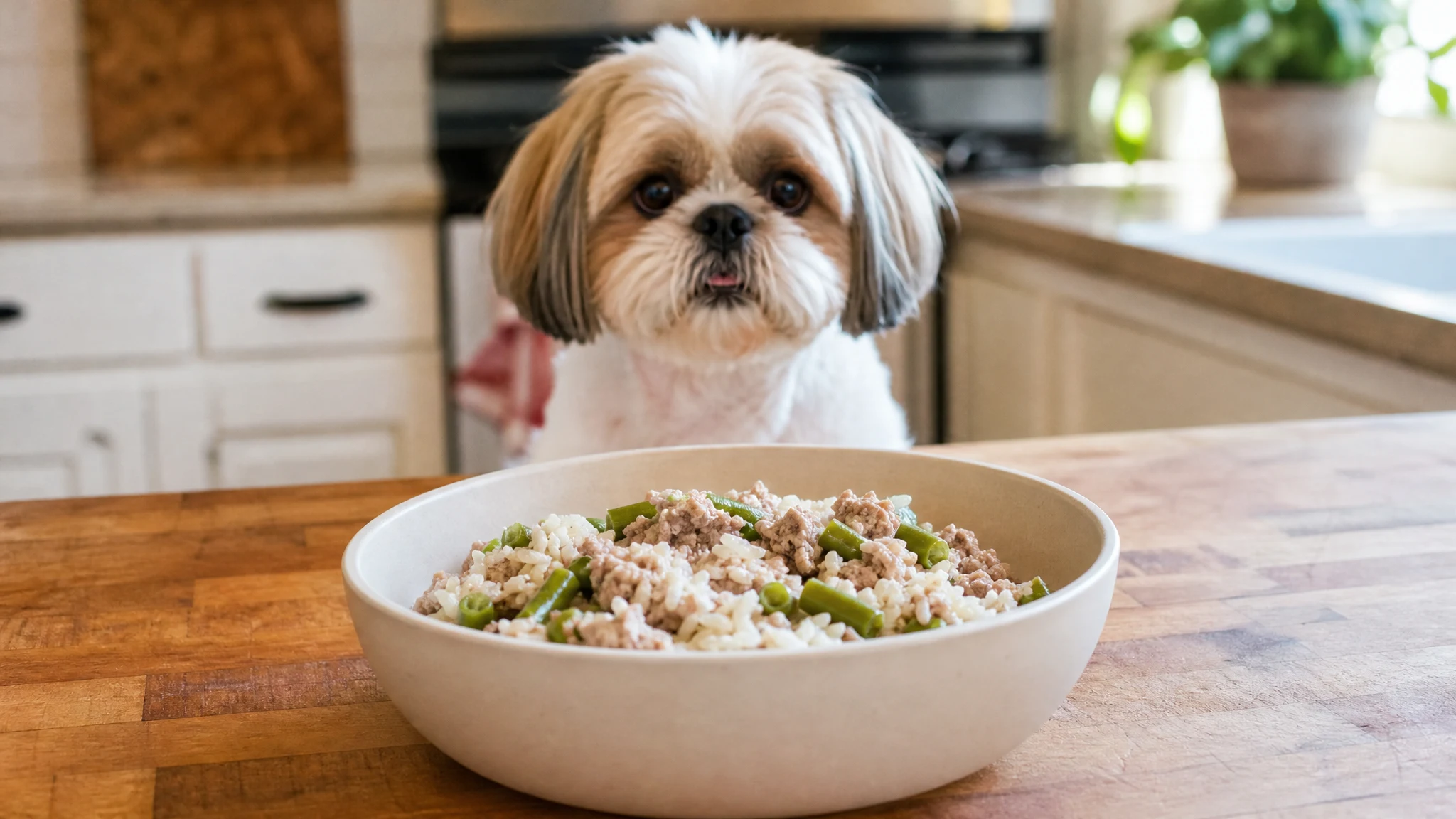
General nutrition information compiled from product labels and published sources, not veterinary advice. Your veterinarian is the right person to choose a diet for your dog, especially one with a health condition.
Many Shih Tzu owners wonder whether cooking at home beats a bag or can from the store. The honest answer is that it depends on the dog, the cook and the recipe. This guide walks you through the decision in order, so you can compare the options on facts rather than marketing.
A note on method: we compared label data published by the brands. We did not run feeding trials or taste tests, and nothing here is a ranking of how well a food works in a real dog.
Why the Shih Tzu Is a Special Case
WebMD describes the Shih Tzu as a small dog, with adults commonly weighing 9 to 16 pounds and living 10 to 18 years on average. Small bodies leave little room for error. A few extra bites a day can be a large share of what a 10-pound dog needs.
WebMD also lists obesity, skin and ear allergies, and short-nosed (brachycephalic) airway problems among the health concerns for the breed. The source does not say what causes the allergies, and it does not say that any food prevents or treats these conditions. Whatever you choose, a veterinarian is the person who decides what suits your individual dog. For more on the basics, see our guide to the diet factors that matter for Shih Tzus.
What You Need Before You Decide
- Your dog's current weight and body condition, as judged by your veterinarian
- Your dog's life stage: puppy, adult or senior
- A list of any skin, ear, stomach or weight concerns you have noticed
- The labels of two or three commercial foods you are considering
- A kitchen scale and measuring cups, if you may cook
- A willingness to ask your veterinarian for a nutrient-complete plan before you start any homemade diet
Step 1: Read the Adequacy Statement First
On a commercial food, find the sentence that says whether the food is complete and balanced, and for which life stage. Whole Dog Journal explains that foods for growth or all life stages carry one of two AAFCO statements: one says the food includes growth of large-size dogs (70 pounds or more as an adult), and the other says it excepts them. According to the same article, small-breed puppies can eat foods with either statement.
This sentence is something a home recipe does not come with. A recipe you find online has no statement behind it unless it was built to meet a nutrient standard. That is the biggest single tradeoff in this comparison.
Step 2: Compare Calories, Not Cups
Cups are a poor way to compare foods. Here are published label figures, all from the brands' own pages:
| Food (form) | Calories listed |
|---|---|
| Royal Canin Breed Health Nutrition Shih Tzu Adult (dry) | 355 kcal ME per cup |
| Hill's Science Diet Adult Small Bites Chicken & Barley (dry) | 365 kcal per cup |
| Freshpet Small Dog Bite Size Chicken Recipe (fresh) | 267 kcal per cup |
| Nom Nom Chicken Cuisine (fresh) | 244 kcal per cup |
A cup of one food can carry about 100 more calories than a cup of another. If you switch styles and keep the cup the same, you may change your dog's daily intake a lot. Brand feeding guides are starting points only. Adjust with your veterinarian's help based on how your dog looks and feels over time.
Step 3: Look at What Commercial Labels Actually Tell You
Labels give ingredient order and guaranteed analysis. For example, Royal Canin lists its Shih Tzu Adult formula with brewers rice, brown rice, chicken by-product meal, chicken fat and oat groats as the first five ingredients, a 22 percent protein minimum and an 18 percent fat minimum. The brand's page says it is for purebred Shih Tzus 10 months and older. The kibble size is described as designed for the breed, but the page gives no measurement.
Some Hill's pages give average dry matter figures rather than guaranteed minimums, so the numbers are not directly comparable with a guaranteed analysis. Check each brand's own page for the details, and ask the brand if something is not stated.
Be skeptical of marketing words. A breed name on a bag tells you the target dog, not that the food will solve a problem. The adequacy statement and the label data are the parts you can verify.
Step 4: Weigh the Homemade Route Honestly
Homemade dog food for shih tzu has real appeal. You pick every ingredient, you can see what goes in the pot, and you can avoid something your dog has reacted to. Those are fair reasons.
The tradeoffs are just as real:
- Nutrient balance. Meat and rice alone are not a complete diet. Getting the full set of nutrients right takes a formulated recipe.
- Consistency. Swapping ingredients week to week can change the nutrient mix without you noticing.
- Time and storage. Cooking, portioning and chilling or freezing small meals is a routine you must keep up.
- Calorie control. With obesity listed as a concern for the breed, portions need weighing, not guessing.
This site does not give home recipes, ingredient amounts or supplement doses. Those depend on your dog, and they are a conversation for your veterinarian or a veterinary nutrition professional.
Step 5: Consider the Middle Ground
Some brands sell fresh or fresh-style foods that you buy ready to serve. Per their own pages, Nom Nom Chicken Cuisine and Freshpet Small Dog Bite Size Chicken Recipe carry AAFCO all-life-stage statements. Nom Nom's covers growth of large-size dogs, while Freshpet's excepts them. JustFoodForDogs Pantry Fresh Chicken & White Rice also states an all-life-stages claim on its page, though the full sentence is worth reading on the brand's site.
These can feel closer to home cooking while still stating a nutrient standard. They are still just labels. Read them the same way you would read a kibble bag.
Step 6: Think About Puppies and Seniors Separately
Puppies and older dogs have different needs than adults. Royal Canin's Shih Tzu Puppy formula is listed for purebred puppies from 8 weeks to 10 months, and its page states a growth statement that includes large-size dogs. Royal Canin's Mature 8+ loaf in sauce is listed for small dogs up to 22 pounds over 8 years old, with a maintenance statement.
Growth is the life stage where an unbalanced home diet carries the most risk, so this is where a veterinarian's input matters most.
Step 7: Make the Change Gradually and Watch
Whichever way you go, change foods slowly. Mix a little of the new food into the old, and shift the mix over several days, or follow your veterinarian's schedule. Keep notes on appetite, stool, coat, skin and ears. Take those notes to your appointments.
Tips
- Weigh portions. Small dogs gain weight fast.
- Count treats and table scraps as part of the daily food.
- Keep the same food long enough to see how your dog does before judging it.
- Ask your veterinarian before adding anything to a complete diet.
Common Mistakes to Avoid
- Cooking plain chicken and rice as a long-term diet.
- Following a recipe written for a large dog and scaling it down.
- Comparing foods by cups instead of calories.
- Choosing a food because the front of the bag sounds natural.
- Assuming grain-free is better. The FDA's page on canine dilated cardiomyopathy (DCM) says adverse event counts alone do not show that a product caused illness. Its last update was dated December 23, 2022, and the agency said it did not plan further public updates without meaningful new science. Ask your veterinarian about it.
What to Expect
A food that suits your dog may show up as steady energy, regular stools, a healthy weight and a comfortable coat. Results vary from dog to dog, and no food is shown to prevent or treat allergies, airway problems or any other condition. If your Shih Tzu has itchy skin, ear trouble or weight changes, call your veterinarian rather than changing the diet on your own.
If your veterinarian recommends a prescription diet, that is something only a veterinarian prescribes.
Sources
- WebMD: What to Know About Shih Tzus
- Whole Dog Journal: In the Fine Print, Nutritional Adequacy Statements
- FDA Center for Veterinary Medicine: Investigation into diets and canine dilated cardiomyopathy
- Royal Canin: Shih Tzu Adult product page
- Hill's Pet: Adult Small Bites product page
- Freshpet: Small Dog Bite Size Chicken Recipe
- Nom Nom: Chicken Cuisine