Homemade Dog Food for Shih Tzu: What Vets Say to Watch For
General nutrition information compiled from product labels and published sources, not veterinary advice. Your veterinarian is the right person to choose a diet for your dog, especially one with a health condition.
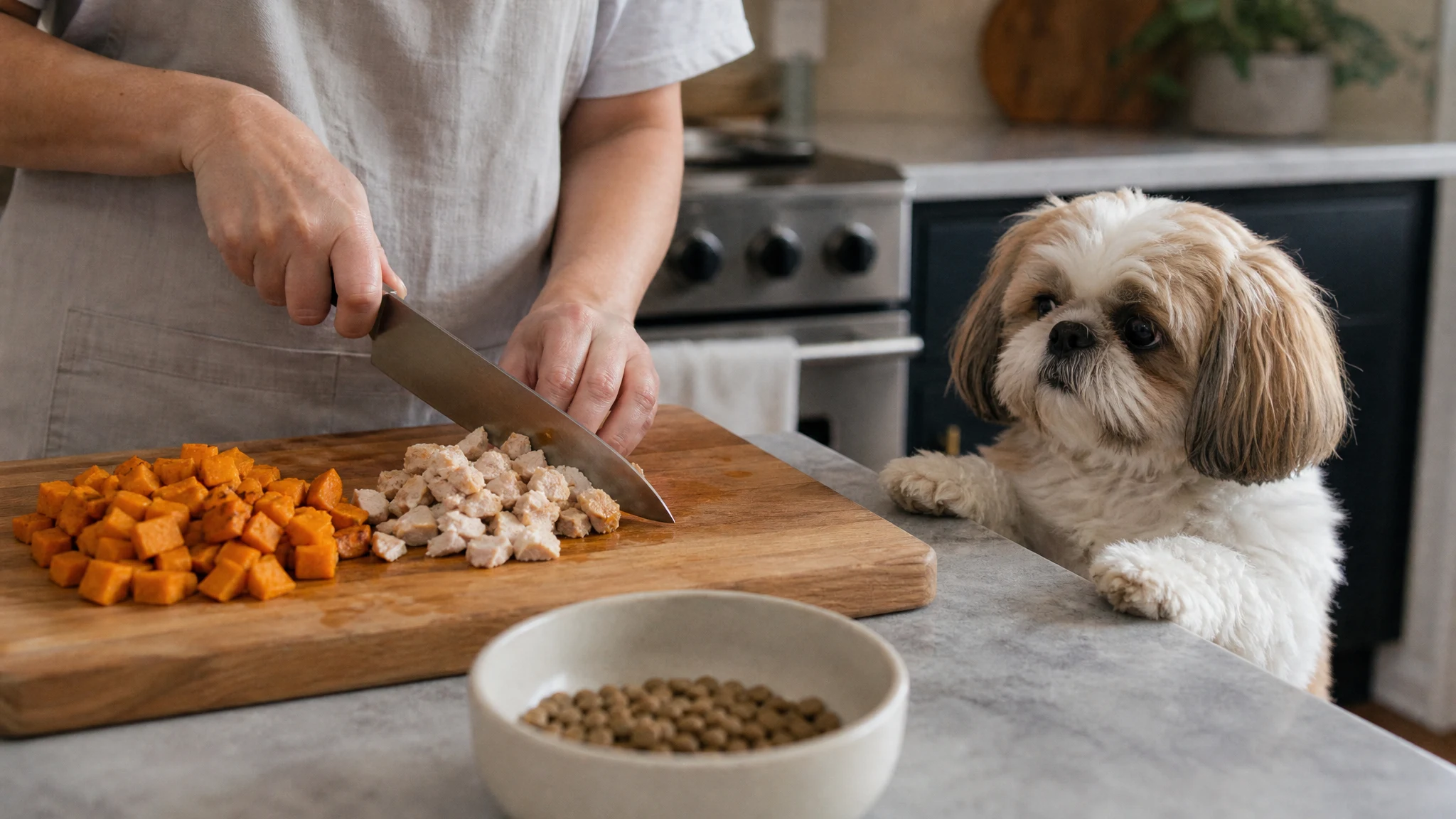
Cooking for your dog sounds simple. You pick good ingredients, you control what goes in the bowl, and you skip the marketing. For a small breed like the Shih Tzu, though, the details matter more than they seem.
This guide walks through how to approach homemade dog food for Shih Tzu households step by step. It focuses on the questions a veterinarian is likely to raise, rather than on a single magic recipe. We did not cook, feed or test any recipes for this page, and no veterinarian reviewed it. Your own vet decides what is right for your dog.
Why a Shih Tzu needs a careful plan
WebMD, a secondary source, lists an adult Shih Tzu weight of 9 to 16 pounds and an average life expectancy of 10 to 18 years. A dog this small eats very little each day, so a small mistake in a recipe is a large share of the whole diet. Over months and years, that adds up.
WebMD also lists obesity, skin and ear allergies, and short-nosed (brachycephalic) airway problems among the health concerns for the breed. The source does not say what causes the allergies, and it does not say that any diet prevents or treats these conditions. What it does tell us is that weight control and ingredient tolerance deserve attention. Both are things a homemade plan has to handle on purpose.
For background on the wider picture, see our page on the diet factors that matter for Shih Tzu nutrition.
What you need before you start
- A veterinarian who knows your dog. Ask for a weight check and a body condition score, plus a note of any allergy, skin, ear or digestive history.
- A complete recipe from a qualified source. Ask your vet whether they can refer you to a veterinary nutritionist who can write or review a recipe for your dog's age and health.
- A kitchen scale. Cups are loose measures. Grams are far more consistent for a dog that eats so little.
- A notebook or spreadsheet. Record what you feed, your dog's weight, stool quality and appetite.
- Airtight containers and freezer space. Ask your vet for safe storage and handling guidance for cooked pet food.
- Any supplements your vet specifically recommends. Do not choose or dose these on your own.
Step-by-step: building a homemade plan
1. Start with a vet visit, not a shopping trip
Book a visit and say plainly that you are thinking about home cooking. Your vet can weigh your dog, note any health concerns and tell you whether home cooking makes sense at all. A puppy, a senior dog, and a dog with skin or ear trouble each need a different conversation.
A veterinarian decides what suits an individual dog. Prescription diets are something only a veterinarian prescribes, and a homemade recipe is not a substitute for one.
2. Ask what "complete and balanced" means for your dog
Commercial dog foods carry an AAFCO nutritional adequacy statement. It says the food is formulated for maintenance, for growth, or for all life stages. A recipe from a blog or a social media post carries no such statement.
Whole Dog Journal, a secondary source, explains that foods for growth or all life stages carry one of two statements about large-size dogs of 70 pounds or more as adults. It notes that small-breed puppies can eat foods with either statement. Ask your vet or nutritionist how your recipe compares with those AAFCO profiles for your dog's life stage, since a Shih Tzu puppy and an adult have different needs.
3. Get a written recipe and follow it exactly
A recipe written for your dog lists each ingredient by weight, the cooking method and any added supplements. Treat it like a prescription for the kitchen. Swapping one protein or vegetable for another can change the balance of the whole meal, so ask before you substitute.
4. Weigh every ingredient
Weigh raw ingredients as the recipe directs, and cook in batches that fit the plan. Divide the batch into daily portions right away. Label each container with the date.
5. Set a starting portion with your vet
Portions are a starting point, not a promise. As a rough reference only, the Royal Canin US product page for its Breed Health Nutrition Shih Tzu Adult dry food lists 355 kcal ME per cup, calculated, as fed. Its example feeding guide gives 3/4 cup (66 g) per day for an 8.8 lb (4 kg), low-activity dog.
That is one commercial label, not a target for your recipe. Your vet can use the calorie content of your homemade meal to set a daily amount for your dog's weight, age and activity.
6. Transition slowly
Ask your vet how gradually to move from the old food to the new one. Sudden changes can upset a small dog's stomach, and a gradual switch makes it easier to tell what is causing a reaction.
7. Track weight and body condition
Weigh your dog regularly and write the number down. Since WebMD lists obesity among the concerns for the breed, small weight gains are worth catching early. Share the log at each checkup so your vet can adjust the portion.
8. Recheck the plan on a schedule
A recipe that suits a young adult may not suit the same dog at ten. Ask your vet how often to review the plan, and call sooner if your dog's weight, coat, skin, stool or energy changes.
What vets commonly ask owners to watch for
These are general cautions to raise with your own vet, not rulings on any single ingredient.
- Incomplete recipes. A meal of meat and rice may look wholesome but may leave out nutrients your dog needs. Ask whether your recipe has been checked against AAFCO profiles.
- Unsafe ingredients. Some human foods are harmful to dogs. Ask your vet for a list of foods to avoid, and do not rely on guesswork.
- Too many calories. Rich toppings and extra treats can push a 9 to 16 pound dog over its daily need quickly.
- Guessing at supplements. More is not safer. Only add a supplement your vet recommends, in the amount your vet specifies.
- Changing allergy suspects without a plan. WebMD does not state what triggers skin and ear allergies in the breed. If you suspect food, ask your vet how to test that properly instead of rotating ingredients yourself.
- Ignoring the DCM conversation. The FDA has investigated a possible link between certain diets and canine dilated cardiomyopathy (DCM). Its most recent update is dated December 23, 2022, and it said it does not plan more public updates until there is meaningful new scientific information. The FDA also cautions that report counts alone do not show that a product caused illness. Ask your vet how this applies to the ingredients in your plan.
Common mistakes to avoid
- Using a recipe from the internet as written. It was not made for your dog.
- Measuring by the cup. A scale is more reliable for tiny portions.
- Changing the recipe on a whim. Each swap can shift the nutrient balance.
- Skipping checkups. Without regular weigh-ins, slow changes go unnoticed.
- Treating food as medicine. No food is shown here to prevent or treat any disease. Health concerns belong with your vet.
- Mixing everything at once. Change one thing at a time so you can see what your dog tolerates.
How we approach comparing homemade and commercial food
We compared label data only, such as AAFCO statements, ingredient lists and calorie figures published by the brands. We did not run feeding trials or taste tests. A commercial label gives you a measurable reference point for calories and nutrient claims. A homemade recipe only matches that level of detail if someone qualified has worked it out for your dog.
If you decide home cooking is not for you, a commercial food that carries an AAFCO statement for your dog's life stage is a simpler route. Ask your vet to help you read the label.
What results to expect
Results vary from dog to dog. Some owners find that a carefully planned home-cooked diet suits their dog well, with steady weight and normal stools, and some dogs do better on a commercial food. No source we rely on says that homemade food will improve any health condition, and we cannot promise any outcome.
A reasonable goal is a dog that holds a healthy weight, eats willingly and has regular checkups. Track those things, and let your vet judge whether the plan is working.