Homemade Diets for Allergy-Prone Shih Tzus: Why Vet Guidance Matters
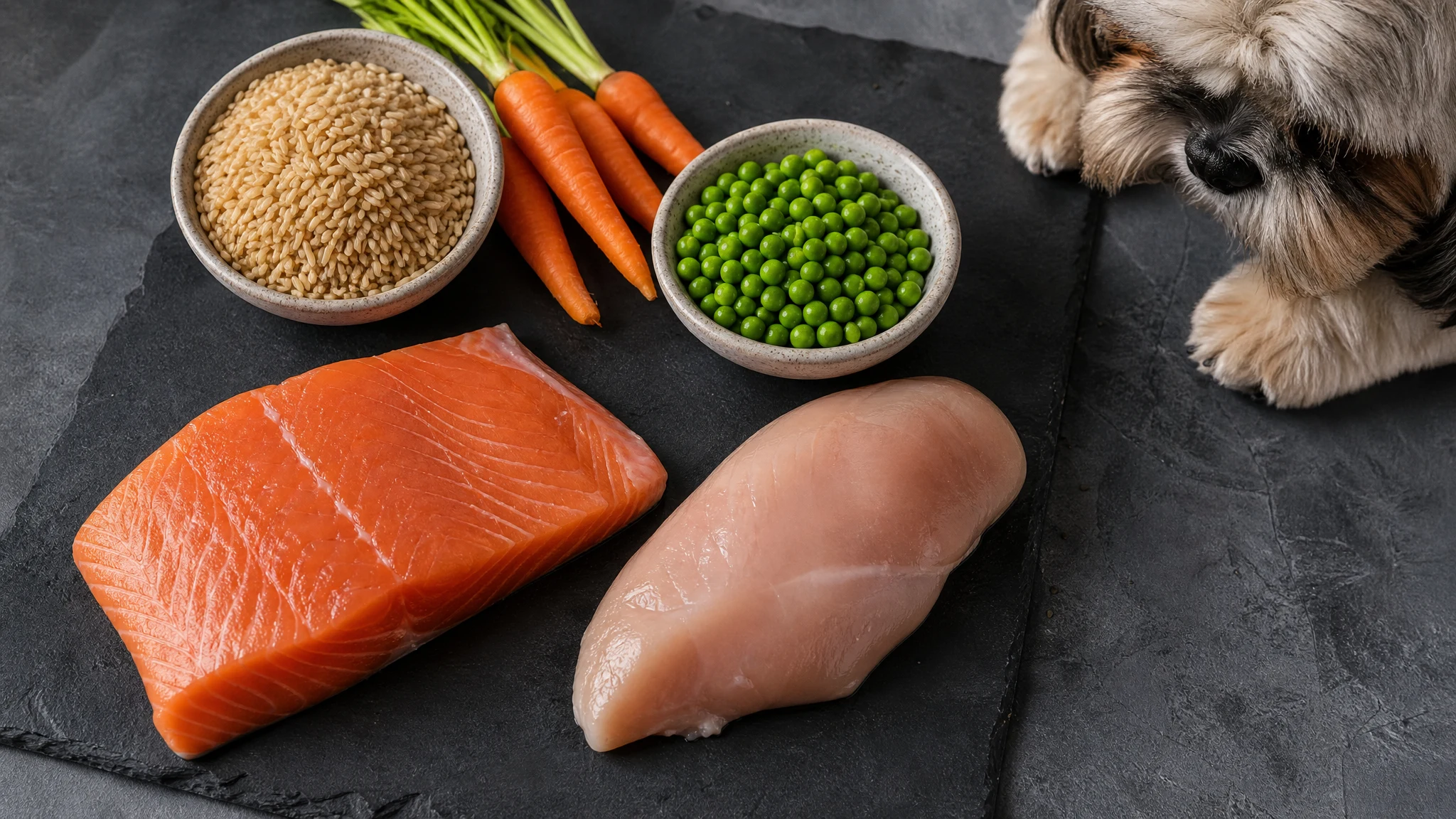
General nutrition information compiled from product labels and published sources, not veterinary advice. Your veterinarian is the right person to choose a diet for your dog, especially one with a health condition.
If your Shih Tzu has itchy skin or recurring ear trouble, cooking at home can feel like the safest answer. You control every ingredient. But a homemade diet is easy to get wrong, and the cost of a mistake falls on a small dog.
This guide walks through how to approach a homemade diet safely. It also explains why there is no single best dog food for shih tzu with allergies that works for every dog. The honest first step is a veterinarian, not a recipe.
Why allergies in Shih Tzus need a careful approach
WebMD lists skin and ear allergies among the health concerns seen in Shih Tzus. It does not say what causes them in a given dog. A food ingredient is one possible trigger, and something in the environment is another.
That matters because a homemade diet only makes sense if food is actually the problem. Only a veterinarian can sort that out. No food, homemade or store-bought, is a treatment for allergies. A vet decides what is right for an individual dog.
Size matters too. WebMD gives an adult weight of 9 to 16 pounds. A few extra bites a day add up fast on a dog that small, and WebMD also lists obesity as a breed concern.
What you need before you start
- An appointment with your veterinarian, and a referral to a veterinary nutritionist if your vet suggests one.
- A written list of everything your dog eats now, including treats, chews, flavored medications and table scraps.
- A simple log of symptoms, such as scratching, paw licking, ear redness and stool quality, with dates.
- A recipe written or approved by a veterinary professional, with exact ingredients and weights.
- A kitchen scale that measures in grams, since cups are not precise.
- Airtight containers and freezer space for batches.
- Any supplements your vet specifies, in the form and amount the vet chooses.
Step-by-step: how to approach a homemade diet
1. Start with a vet visit, not a shopping trip
Book an exam and bring your food list and symptom log. Ask whether food is a likely factor and whether a trial diet makes sense. Ask what other causes should be ruled out first.
Skipping this step can hide a problem that needs different care. It can also leave a dog on an unbalanced diet for months while the real cause goes unaddressed.
2. Ask for a complete and balanced recipe
Dogs need a full set of nutrients in the right proportions. A recipe that looks healthy, such as plain chicken and rice, can still be missing key nutrients. Ask your vet to write a recipe or refer you to a veterinary nutritionist who can.
The standard to look for is the phrase “complete and balanced.” On commercial foods, that phrase comes with an AAFCO nutritional adequacy statement. Whole Dog Journal explains that foods for growth or all life stages carry one of two statements about large-size dogs of 70 pounds or more as adults. It also notes that small-breed puppies can eat foods with either statement. A Shih Tzu is well under that size, so for your dog the more useful question is whether the food is complete and balanced for its life stage.
3. Settle the calories and the portion with your vet
Weigh your dog and ask your vet for a daily calorie target. Then ask the recipe writer to give the recipe in grams and calories.
Label data shows how much foods differ. According to the brand pages, Royal Canin Breed Health Nutrition Shih Tzu Adult lists 355 kcal per cup, Freshpet Small Dog Bite Size Chicken Recipe lists 267 kcal per cup, and Nom Nom Chicken Cuisine lists 244 kcal per cup. A cup of one food is not a cup of another. Weigh homemade food rather than scooping it.
Treat any feeding amount as a starting point. Adjust only with your vet, based on your dog's body condition.
4. Follow the recipe exactly
Weigh each ingredient. Cook as directed. Do not swap one protein for another or leave out a vet-specified supplement because it seems optional.
Small changes can shift the nutrient balance or introduce an ingredient your vet was trying to exclude. If an ingredient is unavailable, ask the recipe writer for a substitute instead of improvising.
5. Transition slowly
Move from the old food to the new one over several days, unless your vet gives a different schedule. Watch stool and appetite. A sudden switch can upset any dog's stomach, and it makes it harder to tell what is causing a reaction.
6. Keep the diet clean while you track results
If your vet has set up a food trial, everything your dog eats counts. That includes treats, dental chews, flavored supplements and the dropped crust from a family meal. Keep the symptom log going daily.
7. Recheck with your vet
Bring the log back at the follow-up. Your vet can decide whether to continue, adjust or end the diet. Ask when your dog should be weighed again, and whether the recipe needs updating as your dog ages.
Common mistakes to avoid
- Using a recipe from a random website. Without a professional behind it, there is no way to know it is complete and balanced.
- Feeding plain meat and rice long term. It is sometimes used briefly for upset stomachs, but ask your vet before relying on it.
- Changing several things at once. New food, new treats and new chews together make it impossible to tell what helped or hurt.
- Guessing portions. On a dog of 9 to 16 pounds, weight gain can happen quickly.
- Assuming grain-free is safer. WebMD does not name grains as the cause of Shih Tzu allergies. The FDA has also looked into reports linking certain diets to canine dilated cardiomyopathy. Its latest update is dated December 23, 2022, and it cautions that report counts alone do not show a product caused illness. If you are weighing grain-free ingredients, discuss it with your vet.
- Adding supplements on your own. Doses should come only from your veterinarian.
What results to expect
Results vary. Some owners of allergy-prone dogs see less scratching or fewer ear flare-ups after a vet-guided diet change. Others see little difference, because the trigger may not be food at all.
Any improvement may take weeks to show, and a diet cannot be promised to resolve skin or ear problems. Judge progress with your vet, using your log, not by how the coat looks on a single good week.
If homemade turns out not to be practical
Home cooking takes time, a scale and steady attention. If it is not workable, ask your vet about commercial options. Fresh and packaged foods differ in their label data, and you can compare them yourself.
We compared label data from brand product pages. We did not run feeding trials or taste tests. Here is what a few labels say:
| Food | Form | First ingredients listed | Calories |
|---|---|---|---|
| Royal Canin Breed Health Nutrition Shih Tzu Adult | Dry | Brewers rice, brown rice, chicken by-product meal, chicken fat, oat groats | 355 kcal ME per cup |
| Freshpet Small Dog Bite Size Chicken Recipe | Fresh | Chicken, chicken liver, carrots, cranberries, eggs | 267 kcal per cup |
| Nom Nom Chicken Cuisine | Fresh | Chicken, sweet potatoes, squash, spinach, dicalcium phosphate | 244 kcal per cup |
Each brand states its own AAFCO adequacy information on its page. None of these foods is presented here as a treatment for allergies. If you want to know which one, if any, suits your dog, that is a question for your vet.
For a wider look at diet factors for the breed, see our guide to Shih Tzu nutrition and the diet factors that matter.
The bottom line
The best dog food for shih tzu with allergies is the one your veterinarian helps you choose after finding out what is actually going on. For some dogs that is a carefully written homemade recipe. For others it is a commercial food. In both cases, the plan should be complete and balanced, measured by weight, and reviewed on a schedule.
Sources
- WebMD: What to Know About Shih Tzus
- Whole Dog Journal: In the Fine Print, Nutritional Adequacy Statements
- FDA Center for Veterinary Medicine: Investigation into a Potential Link Between Certain Diets and Canine Dilated Cardiomyopathy
- Royal Canin US product page
- Freshpet product page
- Nom Nom product page