Best Dog Food for a Shih Tzu With a Sensitive Stomach
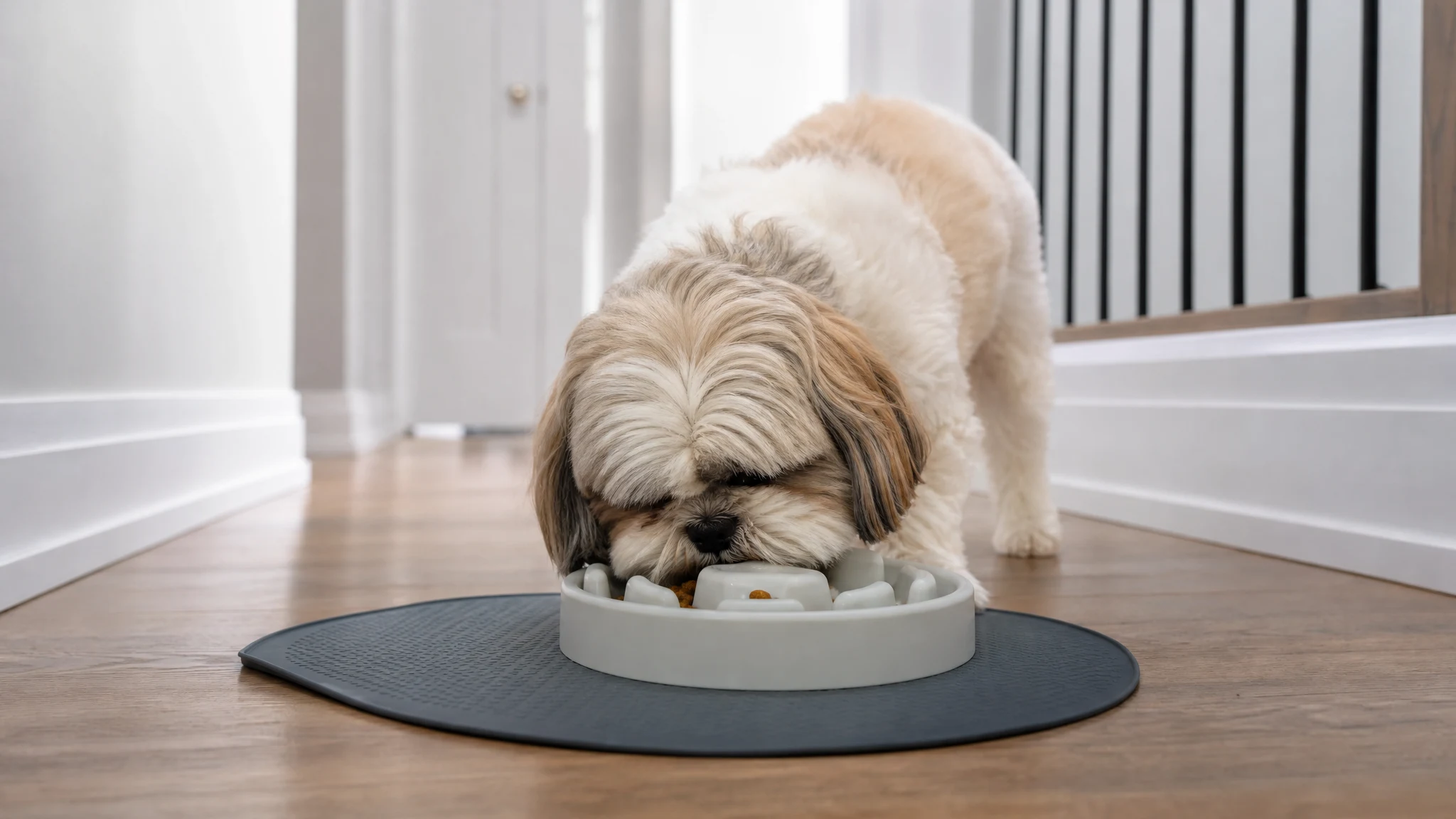
General nutrition information compiled from product labels and published sources, not veterinary advice. Your veterinarian is the right person to choose a diet for your dog, especially one with a health condition.
There is no single food that is right for every Shih Tzu with a touchy tummy. What you can do is learn to read labels, compare a short list of foods, and change foods slowly. This guide walks through that process step by step.
It also shows how a few real labels compare. If you are hunting for the best dog food for Shih Tzu with sensitive stomach signs, the honest answer starts with your veterinarian, because loose stools or vomiting can have many causes that a food swap will not fix.
How we compared the foods
We compared label data published on each brand's own product page: the nutritional adequacy statement, the first five ingredients, the guaranteed analysis and the calories per cup. We did not run feeding trials or taste tests, and we did not feed any of these foods to dogs. Nothing here is a ranking or a promise that a food will settle a dog's stomach.
What you need before you start
- Your dog's current food bag or can, with the full label.
- A notebook or phone note for stool quality, appetite, vomiting and itching.
- A kitchen scale or a standard measuring cup.
- Your dog's recent weight from the vet.
- The product pages of any foods you are considering.
- An appointment, or a phone call, with your veterinarian.
Step 1: Rule out a medical cause first
A sensitive stomach is a description, not a diagnosis. Parasites, an infection, a sudden treat binge or an underlying illness can all look like food trouble. Call your veterinarian before you change anything, especially if your dog has vomiting, bloody stool, a swollen belly or is losing weight.
WebMD lists skin and ear allergies among the problems seen in Shih Tzus, and it does not state whether the trigger is food or the environment. Only your veterinarian can sort that out for your individual dog. If an elimination diet or a prescription diet is needed, that is something a veterinarian prescribes and supervises.
Step 2: Start a simple symptom log
For a week or two, write down what your dog eats, including treats, chews and table scraps. Note stool quality, gas, vomiting and scratching. A clear record helps your vet see patterns, and it keeps you from changing three things at once.
Step 3: Check the weight and calorie picture
WebMD gives an adult Shih Tzu weight of about 9 to 16 pounds and lists obesity as a concern for the breed. Small bodies mean small mistakes add up fast. A few extra handfuls of kibble is a big jump for a dog this size.
Compare foods by calories per cup, not only by ingredients. Use the feeding guide on the label as a starting point, then adjust with your veterinarian based on body condition. For more on the wider picture, see this overview of the diet factors that matter for Shih Tzus.
Step 4: Match the life stage and the adequacy statement
Find the AAFCO statement on the label. It should say the food is formulated for maintenance, growth or all life stages. Whole Dog Journal explains that foods for growth or all life stages carry one of two statements: one that includes growth of large-size dogs (70 pounds or more as an adult), and one that excepts it. Whole Dog Journal notes that small-breed puppies can eat foods with either statement.
So a Shih Tzu puppy does not need a large-breed puppy formula, and an adult does not need a puppy food. Pick the stage that fits your dog.
Step 5: Read the ingredient list with a skeptical eye
Ingredients are listed by weight before cooking, so the first five tell you the most. Look at whether the protein sources are named (chicken, beef) or vague, and note which carbohydrate sources appear. If your dog has reacted to a food before, compare that old label to the new one and look for overlap.
Be wary of marketing words such as "gentle," "natural" or "premium." They are not label standards. Also note that grain-free is not the same as easier on the stomach. The FDA has been looking into reports of dilated cardiomyopathy (DCM) in dogs eating certain diets. Its latest update is dated December 23, 2022, and it cautions that adverse event counts alone do not show that a product caused illness. Ask your veterinarian whether grain content matters for your dog.
Step 6: Compare a short list of real labels
The table below uses label data from each brand's own page. It is a comparison tool, not an endorsement, and none of these brands claims the food is a fix for stomach trouble in the pages we read. Hill's lists averages on a dry matter basis rather than guaranteed minimums, so its numbers are not directly comparable to the others.
| Food | Stage and statement | First five ingredients | Protein / fat / fiber | Calories |
|---|---|---|---|---|
| Royal Canin Breed Health Nutrition Shih Tzu Adult (dry) | Adult, maintenance | Brewers rice, brown rice, chicken by-product meal, chicken fat, oat groats | 22% min / 18% min / 4.7% max | 355 kcal per cup |
| Royal Canin Breed Health Nutrition Shih Tzu Puppy (dry) | Puppy, growth | Chicken by-product meal, brewers rice, corn, chicken fat, wheat gluten | 26% min / 16% min / 3.6% max | 354 kcal per cup |
| Hill's Science Diet Adult Small Bites Chicken & Barley (dry) | Adult, maintenance, feeding-tested | Chicken, cracked pearled barley, brown rice, brewers rice, whole grain wheat | Averages of 24% / 15.1% / 1.7% (dry matter) | 365 kcal per cup |
| VICTOR Hi-Pro Plus Small Breed Adult (dry) | All life stages, large-size growth excepted | Beef, chicken meal, beef meal, brown rice, whole grain millet | 30% min / 14% min / 5% max | 360 kcal per cup |
Brand pages: Royal Canin Shih Tzu Adult, Royal Canin Shih Tzu Puppy, Hill's Science Diet Adult Small Bites and VICTOR Hi-Pro Plus Small Breed Adult.
What the table does and does not tell you
Royal Canin makes its Shih Tzu formulas for purebred Shih Tzus, with the adult formula for dogs 10 months and older. The adult label starts with rice, and the puppy label starts with chicken by-product meal. That is a fact about the ingredient list, not a promise about digestion.
The fat minimums differ quite a bit, from 14% to 18% among the adult foods shown. If your dog's stomach has reacted to rich food, bring those numbers to your veterinarian. We cannot say which level suits an individual dog.
Kibble size is also a question. Royal Canin says its Shih Tzu kibble is designed for the breed, and Hill's lists a small bite size. Neither page gives a measurement, so check with the brand if size matters to your dog.
Fresh and wet options exist too, and some brands, including Freshpet and Nom Nom, publish their own label data. We left them out of the table because their moisture content makes the percentages hard to compare with dry food. If you are considering one, read its full label and ask your vet.
Step 7: Switch foods slowly
Do not swap foods overnight. Mix a small amount of the new food into the old, and raise the share a little every day or two. Many owners take a week or longer, and a dog with a history of upset may need more time. Ask your veterinarian for a schedule that fits your dog.
Measure every meal. Start from the label's feeding guide, which is only a starting point. Royal Canin's adult Shih Tzu page, for example, gives 3/4 cup (66 g) per day for an 8.8 lb (4 kg), low-activity dog. Then adjust to your dog's body condition with your vet.
Step 8: Give it time and keep the log going
Keep treats minimal and keep them consistent during the trial. Continue noting stool, appetite, energy and itching. If symptoms get worse, or your dog stops eating, stop the trial and call your veterinarian.
Tips that help
- Change one thing at a time: food, treats or chews, never all three.
- Keep the old bag until the trial is over, so you can compare labels.
- Take photos of labels. Formulas can change.
- Weigh your dog every month or so. WebMD notes obesity as a breed concern.
- Use a slow feeder or smaller meals only if your veterinarian agrees.
- Check the brand page for the current ingredient list before you buy.
Common mistakes to avoid
- Switching too fast. A quick change can upset even a sturdy stomach.
- Chasing buzzwords. "Sensitive," "limited" and "natural" are marketing terms unless the label backs them up.
- Assuming grain-free is safer. The FDA's DCM page does not show that, and it says counts of reports do not prove cause.
- Ignoring treats. Chews and table scraps can be the real culprit.
- Self-treating a serious sign. Repeated vomiting, blood in stool or lethargy need a vet visit, not a new bag of food.
- Overfeeding. Extra calories add up quickly in a dog of 9 to 16 pounds.
What results to expect
Some owners see firmer stools and fewer upsets once they find a food their dog tolerates and stop changing things. Others see no change, which can point to a cause other than diet. Results vary, and no food can be promised to help any individual dog.
If your dog improves, that suggests the new food agrees with them, but it does not prove the old food was the cause. If there is no improvement after a fair trial, go back to your veterinarian with your log. They can decide on tests or a prescription diet.
Sources
- WebMD: What to Know About Shih Tzus
- FDA Center for Veterinary Medicine: Investigation into potential link between certain diets and canine dilated cardiomyopathy
- Whole Dog Journal: In the Fine Print, Nutritional Adequacy Statements
- Royal Canin: Shih Tzu Adult product page
- Royal Canin: Shih Tzu Puppy product page
- Hill's Pet: Science Diet Adult Small Bites product page
- VICTOR Pet Food: Hi-Pro Plus Small Breed Adult product page