Best Training Treats for Shih Tzus (and How Many to Give)
General nutrition information compiled from product labels and published sources, not veterinary advice. Your veterinarian is the right person to choose a diet for your dog, especially one with a health condition.
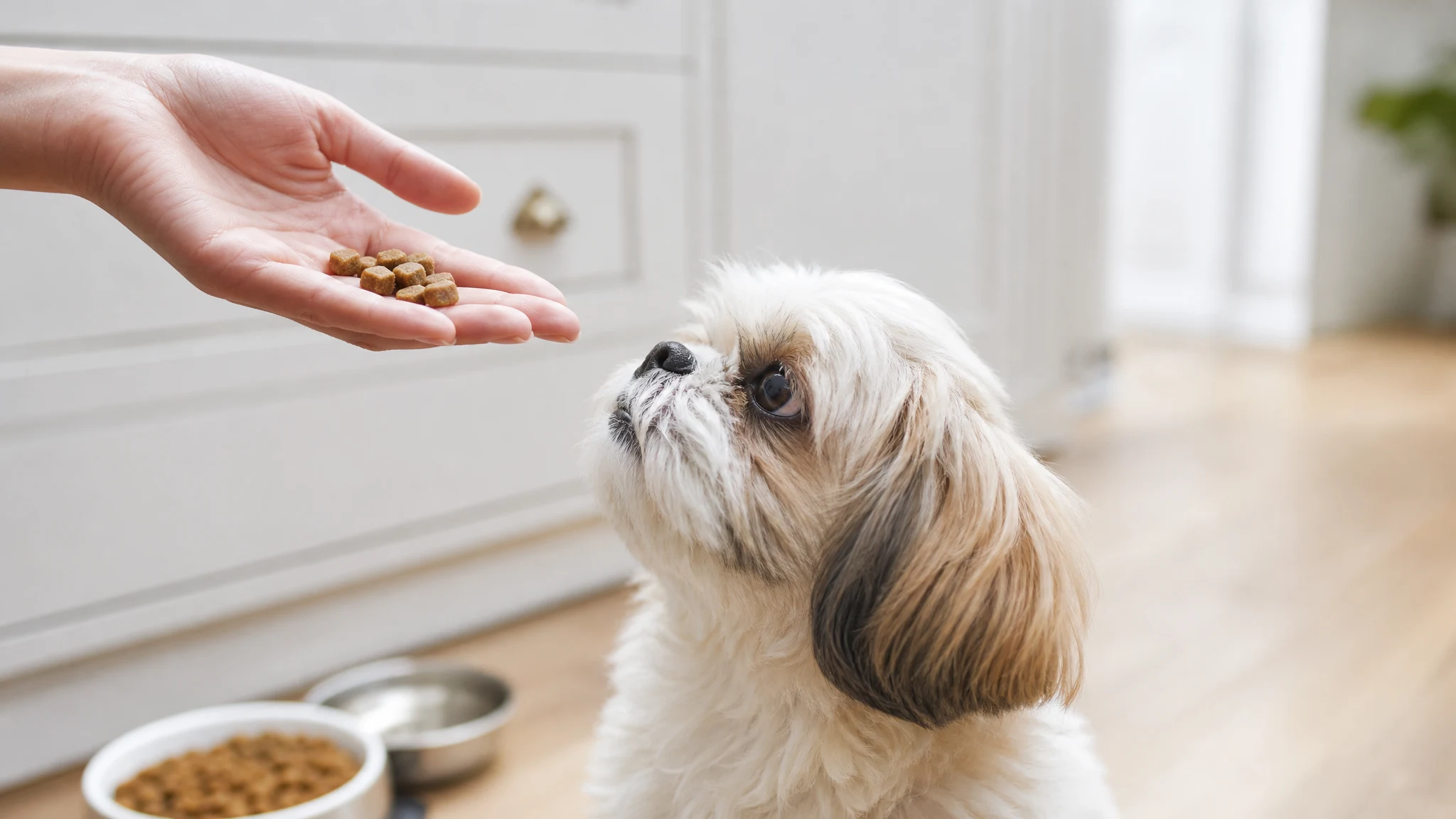
Treats do most of the work in reward-based training. They also add calories fast in a dog that weighs 9 to 16 pounds, according to WebMD. A handful of the wrong treats can add up to a meaningful part of a small dog's day.
This guide shows how to choose training treats for Shih Tzus, cut them to a useful size, and count them so they fit around regular meals. It does not rank brands. It explains how to read a treat label and decide for yourself.
Why treat choice matters for this breed
WebMD lists obesity among the health concerns it describes for Shih Tzus. It also lists skin and ear allergies, though it does not say what triggers them, and short-nosed (brachycephalic) airway problems. Extra weight is the one most closely tied to treats.
No treat prevents or treats any of these conditions. What a treat can do is fit your plan or work against it. If your dog has a weight, skin or airway concern, your veterinarian decides what is right for that dog.
What you need
- Your dog's regular food and its feeding guide from the bag or the brand's website.
- A treat with a printed calorie count (look for kcal per treat or per cup, ounce or gram).
- A small cutting board and a knife or kitchen scissors.
- A treat pouch or small container.
- A kitchen scale or measuring cup, so your food portions stay consistent.
- A note or phone app to track treats for a few days.
Three treat categories worth knowing
These are categories, not product picks. Any treat in them can be a reasonable choice if the label fits your dog.
Soft training treats
Soft treats are easy to bite and easy to break into tiny pieces. That suits a small mouth and fast repetition. Check the label for a calorie count and read the ingredient list for anything your dog has reacted to before.
Soft treats vary a great deal in calories per piece, so do not assume they are small just because the pieces look small.
Freeze-dried single protein treats
These are made from one animal protein, such as chicken or beef. A short ingredient list makes it easier to see what your dog is eating. That can help if you are watching for a food trigger with your veterinarian, though the cause of skin and ear allergies is not stated by WebMD.
They are light and crumbly. Many are easy to snap into small bits, but hard pieces need checking. Look for a calorie statement on the package and a complete ingredient list.
Vegetables
Some dogs accept small pieces of plain vegetables as rewards. They are a low-effort way to cut down on packaged treats. Not every vegetable is safe for dogs, so confirm your choice with your veterinarian first.
Keep pieces plain and small. Skip seasoning, oil and anything cooked with onion or garlic.
Step-by-step: choose and portion training treats
Step 1: Find your dog's daily food amount
Start with the feeding guide on your dog's regular food. Treat it as a starting point, not a fixed rule. Your veterinarian can adjust it based on body condition.
As an example, the Royal Canin US page for its Breed Health Nutrition Shih Tzu Adult dry food lists 355 kcal ME per cup, as fed, calculated. Its feeding table gives 3/4 cup (66 g) per day for an 8.8 pound, low-activity dog. That works out to about 266 kcal a day from meals. This is arithmetic from the label, not advice for your dog. If you feed another food, use that label.
Step 2: Set a treat budget
A common guideline, often attributed to the World Small Animal Veterinary Association (WSAVA), is to keep treats to about 10 percent of daily calories. Check WSAVA's current guidance and ask your veterinarian whether that share suits your dog.
Using the example above, 10 percent of about 266 kcal is roughly 27 kcal for the whole day. That is a small amount. It is why treat size and calorie counts matter so much for a dog this size.
Step 3: Read the treat label
Find the calories per treat, or per ounce or gram if the package gives it that way. If you cannot find a calorie statement, check with the brand before you use the treat for training.
Suppose, as a made-up example, a package says 2 kcal per piece. A 27 kcal budget would allow about 13 pieces a day. If the pieces are 10 kcal each, it allows fewer than three. Your real numbers will differ.
Step 4: Cut treats to pea size or smaller
For a Shih Tzu, a piece about the size of a pea, or smaller, is plenty. The dog is rewarded by the act of getting a treat, not by the size of it. Small pieces also let you reward many times in one session without going over budget.
Cut the treats before you start. Fumbling with a knife mid-session slows your timing. Cutting also makes a small number of treats stretch further.
Step 5: Subtract treats from meals when needed
If a training day uses a large share of the treat budget, trim the next meal slightly. Do this in small steps and watch your dog's body condition. Ask your veterinarian before making a big change.
Step 6: Reward quickly and keep sessions short
Give the treat within a second or two of the behavior you want. Keep sessions to a few minutes. Reward-based training, as supported by the American Veterinary Society of Animal Behavior (AVSAB), relies on rewarding what you want rather than punishing what you do not.
Use your best treats for harder tasks, such as coming when called around distractions. Use lower-value treats, or part of a regular meal portion, for easy cues the dog already knows.
Step 7: Track for a week
Write down every treat for several days, including those from visitors and family members. Compare the total with your budget. Most people find the total is higher than they guessed.
Tips that make it easier
- Pre-count the day's treats in a small container. When it is empty, training treats are done.
- Use a piece of your dog's regular kibble as a lower-value reward. The calories are already part of the meal plan.
- Change one thing at a time. If you add a new treat and your dog's stomach or skin looks off, you will know what changed.
- Store soft treats as the package directs so they stay fresh.
- Choose a treat with a smell your dog likes, but check the calories before you buy more of it.
Common mistakes to avoid
Using full-size treats
Many packaged treats are made for larger dogs. A whole one can be a big portion of a small dog's daily allowance. Break them up.
Ignoring calories because the treat is "natural"
A treat can have a short, simple ingredient list and still be calorie dense. Marketing words such as natural, premium or grain free tell you little about calories. The numbers on the label do.
Forgetting the other treats
Dental chews, bits of table food, and rewards from other people all count. Share your budget with everyone in the house.
Giving treats for free
Treats handed out with no behavior attached add calories without helping training. Ask for a simple cue first, such as sit, then reward.
Making changes without asking
If your dog has a diagnosed condition, a food allergy concern or a weight problem, ask your veterinarian before changing treats. Prescription diets are something only a veterinarian prescribes.
Switching foods because of treat worries
Treats are only part of the picture. If you are also reviewing your dog's main food, see our comparison of foods by label data. We compared label information only. We did not run feeding trials or taste tests.
What to expect
With small, well-timed rewards, many dogs learn simple cues such as sit, come and watch me in a few weeks of short daily sessions. Results vary by dog, age, and how consistent the training is. Distracted dogs and young puppies often need more repetition.
Keeping treats within a set calorie budget may help your dog stay at a healthier weight alongside meals and exercise. It is not a guarantee, and it does not replace veterinary advice. Your veterinarian can check body condition and tell you whether your plan is working.
The FDA Center for Veterinary Medicine has also said that adverse event counts alone do not show a product caused illness in its canine DCM investigation. If you have concerns about ingredients in any food or treat, raise them with your veterinarian.
Quick checklist
- Look up your dog's daily food amount on the food's own feeding guide.
- Confirm a treat share with your veterinarian. The WSAVA guideline is a common starting reference.
- Choose treats that state calories on the package.
- Cut pieces to pea size or smaller.
- Count treats daily and adjust meals if needed.
- Keep sessions short and reward quickly.
- Review progress with your veterinarian.